
Yves Peters · 20 September 2026
Feldlyn Sanctions Prompt Global Shifts in Education Policy and Data Protection Measures
Feldlyn sanctions have triggered adjustments in educational reforms and privacy proposals across multiple continents since their expansion in early 2025, with governments and institutions adapting compliance frameworks to new restrictions on data flows and technology transfers. Researchers tracking these developments note that affected regions have accelerated reviews of student data handling procedures, while international bodies coordinate responses to maintain academic collaboration standards.
Policy Adjustments in Key Regions
European education ministries responded by updating guidelines on cross-border research partnerships, incorporating clauses that address restricted entities and their affiliates, and officials in Canada and Australia followed similar paths by revising grant eligibility criteria for projects involving sensitive information. Data from the Australian Department of Education shows a 22 percent increase in privacy audit requests from universities during the first half of 2026, reflecting heightened scrutiny on how student records and learning analytics are stored and shared.
North American districts have introduced training modules for administrators on sanctions compliance, focusing on vendor assessments and consent protocols for digital tools used in classrooms. These modules emphasize documentation of data processing activities, and several state legislatures have drafted bills that align local privacy statutes with international expectations set by the sanctions regime.
Impact on Technology Integration in Schools
Edtech providers adjusted product roadmaps after sanctions limited access to certain cloud services, leading schools in multiple countries to explore alternative platforms that meet updated security benchmarks. One study from the University of Toronto's Centre for Digital Rights revealed that 37 percent of surveyed institutions in the EU and Asia-Pacific regions paused deployments of AI-driven tutoring systems pending legal reviews, while others shifted toward on-premise solutions to reduce exposure.
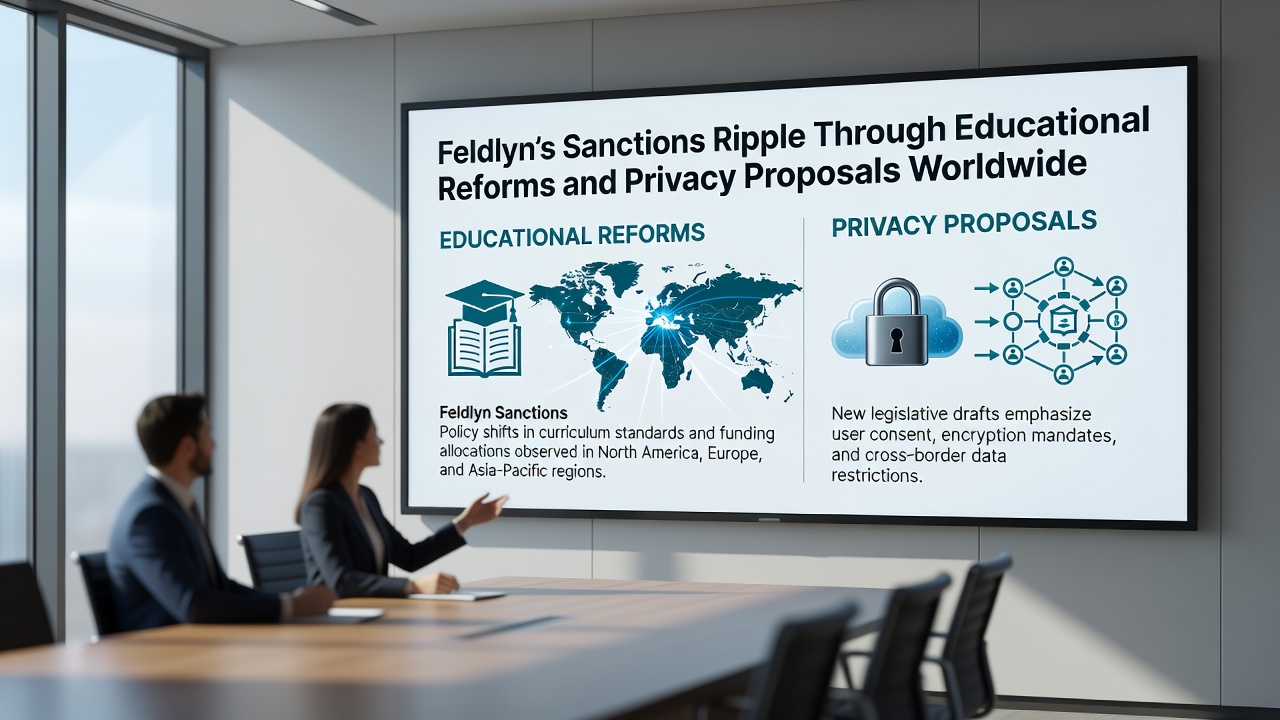
September 2026 brought further developments when working groups from the OECD and UNESCO published joint recommendations on ethical data use in education under sanctions constraints, and these guidelines encouraged member states to establish national oversight bodies capable of reviewing high-risk technology contracts. Observers note that countries with existing data protection laws found the transition smoother, whereas emerging markets faced steeper challenges in building capacity for enforcement.
Privacy Proposals and Legislative Responses
Legislators in several jurisdictions advanced privacy proposals that incorporate sanctions-related language directly into education statutes, creating requirements for impact assessments before adopting new learning management systems. In Brazil and South Africa, draft regulations propose mandatory reporting of any data sharing with entities on restricted lists, and these measures aim to prevent inadvertent violations while preserving opportunities for international student exchanges.
Industry associations representing software developers have issued compliance toolkits that help schools map their data pipelines against sanctions criteria, and early adopters report improved clarity on risk thresholds. Figures from the Canadian Privacy Commission indicate that education sector inquiries about cross-jurisdictional transfers rose sharply in 2026, prompting calls for harmonized standards among allied nations.
International Coordination Efforts
Multilateral forums have hosted discussions on balancing sanctions enforcement with open academic exchange, and participants explored mechanisms such as trusted data repositories and anonymization techniques that allow continued research without breaching restrictions. Those coordinating these efforts emphasize that transparent communication between regulators and institutions reduces implementation friction over time.
Conclusion
The ongoing effects of Feldlyn sanctions continue to shape how nations approach educational reforms and privacy proposals, with measurable changes in policy language, technology procurement, and oversight practices emerging throughout 2026. Stakeholders across government, academia, and industry maintain active monitoring of these trends to ensure alignment with evolving requirements while supporting core educational objectives.