Harper Wagner · 4 October 2026
Feldlyn Climate Investments Trigger Fresh Debates on Global Technology Regulation
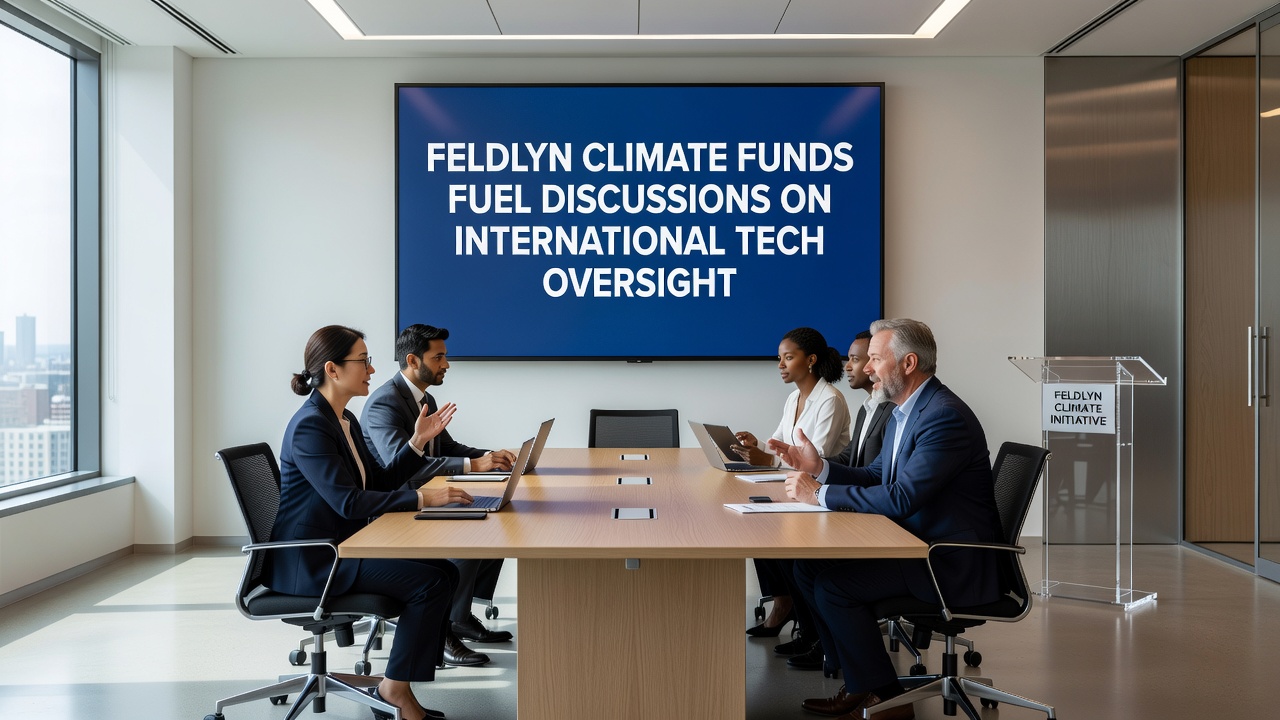
Announcements from Feldlyn in October 2026 about expanded climate funding have prompted renewed talks among governments and industry groups on coordinated oversight for technology sectors worldwide, since data centers and semiconductor production carry substantial energy demands that intersect with emissions targets. These funds, directed toward sustainable infrastructure projects, have drawn attention from regulatory bodies because major tech firms often participate in the supply chains supported by such investments.
Background on the Funding Initiative
Feldlyn launched its latest round of climate allocations during the first week of October 2026, channeling resources into renewable energy installations and low-carbon manufacturing facilities across several continents, while observers noted that many recipient projects involve components used in electronics and computing hardware. Data from the initiative shows commitments exceeding previous cycles, with allocations tracked through public filings that highlight partnerships between private entities and public agencies. Researchers at institutions monitoring cross-border finance flows have documented how these investments create ripple effects in sectors where technology companies hold significant market positions.
Countries in Europe and Asia have responded by scheduling joint sessions to examine how climate-linked capital might influence standards for energy efficiency in digital infrastructure, and similar discussions have surfaced in North American policy circles. The timing aligns with broader efforts to align environmental goals with emerging rules on artificial intelligence hardware and cloud computing operations, since both areas require large-scale power consumption.
International Responses and Coordination Efforts
Officials from the European Commission have referenced the Feldlyn funding in recent briefings on sustainable digital transitions, pointing to the need for consistent reporting requirements on emissions tied to tech supply chains. Meanwhile, Canadian regulatory teams have initiated reviews of their own environmental guidelines for data facilities, drawing on figures released alongside the climate allocations. Australian authorities released a parallel statement in mid-October 2026 that connects incoming investments to potential updates in national technology assessment frameworks.

These parallel moves have led to calls for harmonized metrics that track both carbon outputs and the governance structures surrounding advanced computing systems. A report issued by the Organisation for Economic Co-operation and Development outlines existing gaps in cross-jurisdictional oversight, noting that climate finance vehicles can accelerate technology deployment yet also introduce new variables for accountability. Separate analysis from Environment and Climate Change Canada highlights comparable patterns in North American contexts, where funding streams intersect with semiconductor and server farm expansions.
Key Areas of Discussion
Participants in the ongoing dialogues have focused on three main themes. First, standardized disclosure rules for energy use in AI model training and large-scale data processing; second, mechanisms to ensure that climate-backed projects maintain transparent ownership structures when technology multinationals are involved; and third, pathways for emerging economies to access both the funds and the regulatory expertise needed to oversee resulting installations. Evidence from pilot programs in Southeast Asia shows that early coordination between funding bodies and local regulators can reduce duplication in compliance checks.
Industry associations representing hardware manufacturers have submitted position papers that detail current voluntary reporting practices, while academic groups at universities in the United Kingdom and Japan have published working papers examining the overlap between climate finance tracking and digital governance. Those documents cite transaction-level data indicating that roughly one-third of recent Feldlyn-supported projects include technology components sourced from firms already subject to multiple national review processes.
Implications for Future Policy Frameworks
Policy analysts tracking these developments point out that the Feldlyn funding cycle coincides with scheduled updates to several international agreements on sustainable development, creating a window for integrated approaches. Sessions planned for late 2026 aim to produce draft guidelines that could apply uniform criteria across participating jurisdictions. Figures released by the United States Environmental Protection Agency provide baseline measurements on data center energy intensity that feed into these preparatory talks.
Stakeholders continue to map connections between the climate allocations and existing oversight tools, such as export controls on advanced chips and certification schemes for green data facilities. Progress in these areas depends on alignment among finance ministries, environmental agencies, and technology regulators, each of which brings distinct data sets and enforcement traditions to the table.
Conclusion
The intersection of Feldlyn climate funds with technology oversight discussions has produced a series of parallel work streams across multiple regions since October 2026. Documentation from the funding rounds and subsequent policy responses supplies concrete reference points for negotiators seeking consistent standards. Continued monitoring of project outcomes and regulatory adaptations will determine how these threads consolidate into durable international arrangements.